Protein needs don't shrink just because your appetite does. If anything, the case for hitting your number gets stronger: when the body runs on fewer calories, dietary protein is what spares lean mass from being used as fuel.
The math, made practical
Take your weight in pounds, divide by 2.2 for kilograms, then multiply by 1.2 and 1.6 for your range. Two realistic examples:
| 150 lb (68 kg) adult | 82 to 109 g/day |
| 200 lb (91 kg) adult | 109 to 146 g/day |
Hitting the number on a small appetite
The problem is rarely knowledge, it's volume. A hundred grams of protein is a lot of chicken when you're full after six bites. Three tactics that work:
- Eat protein first, every meal. If you stop early, you stopped after the part that matters.
- Choose dense over big: Greek yogurt, eggs, cottage cheese, fish. More grams per bite.
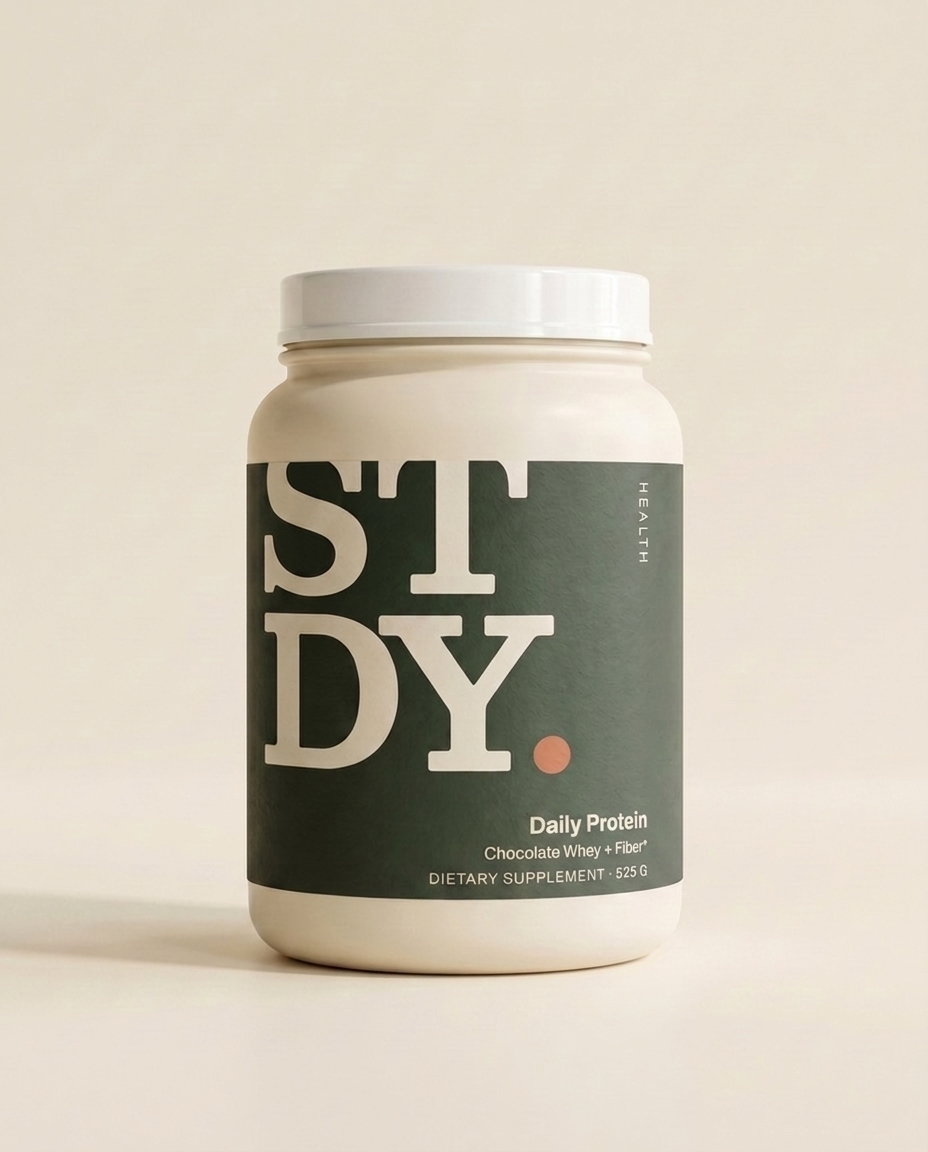
- Drink one serving. A 22 g whey shake covers about a fifth of most targets in two minutes, on days chewing feels like work.*
When to talk to your clinician
If you have kidney disease, are pregnant or nursing, or are on a medically supervised plan, your protein target is a conversation with your care team, not a formula from the internet. Bring this article if it helps.
Common questions
Can I just eat protein once a day?
Splitting protein across 2 to 3 eating occasions supports better muscle protein synthesis than one large dose, though total daily intake matters most.
Is too much protein hard on the kidneys?
In healthy adults, intakes in the 1.2 to 1.6 g/kg range are well studied and considered safe. With existing kidney conditions, ask your clinician first.
Do protein needs change with age?
Yes. Adults over 60 generally benefit from the higher end of the range, since muscle protein synthesis becomes less efficient with age.